Proposed trapping ban sparks debate on P.E.I.
- Judith Mendiolea Lelo de Larrea
- Jan 21, 2025
- 4 min read

Judith Mendiolea

A proposed ban on trapping in P.E.I. has ignited a heated debate, over managing nuisance wildlife and protecting the Island’s ecosystems.
René Lombard, leader of the ban trapping campaign argues that trapping methods such as snares and conibear traps are inhumane and outdated, while trappers stress the importance of their work in controlling species like beavers and coyotes.
“There are so many humane methods to coexist with wildlife,” Lombard said. “We can protect ecosystems and prevent harm without resorting to cruel methods.”
Last fall 2024, the Standing Committee on Natural Resources and Environmental Sustainability released a report suggesting reforms to trapping regulations.
Proposals included mandatory trap signage on public lands and support for humane methods of wildlife management. Despite these recommendations, the committee refrained from backing a total ban, highlighting the need to balance tradition with evolving public concerns.
But for trappers like Luke Peters who grew up hunting with his dad, banning these tools would leave P.E.I. vulnerable to the unchecked spread of nuisance animals.
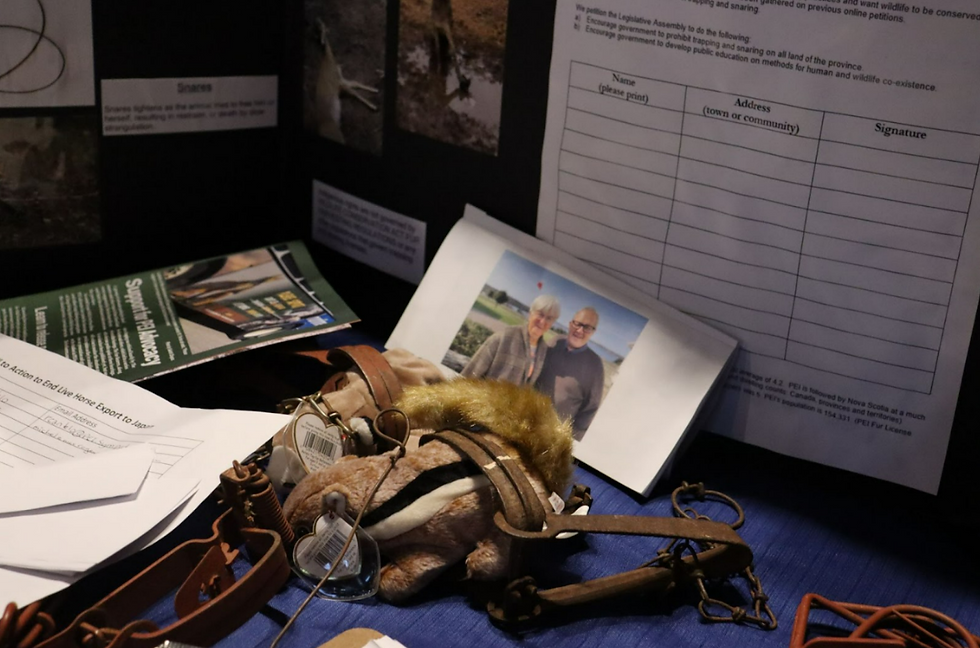
“Trapping is a very effective or useful management technique for these species,” Peters said as the lab assistant for the wildlife and conservation program at Holland College.
“It helps control populations and limits the spread of diseases.”
Trapping’s role in wildlife management
P.E.I.’s beaver population has been a focal point in the debate.
While their dams are vital for maintaining wetlands, which support biodiversity and absorb carbon dioxide, they can also flood farmland and roads, causing economic and environmental challenges.
“The Fish and Wildlife Division has said trapping is an important aspect of trying to maintain beaver populations,” said Wayne Gairns, project coordinator for the Wildlife Conservation Fund.
David Jameson, owner of Wild Island Pest Management, believes that removing trapping as a tool could lead to significant problems.
“If I’m not allowed to trap, it’s going to cause chaos. Overabundance of raccoons and skunks would create major problems in Charlottetown, Stratford, and beyond,” he said.

Concerns about pets
While trappers highlight the necessity of their work, critics focus on the unintended victims of trapping: pets and other wildlife.
“The problem is pets getting caught in snares because people are walking their dogs off-leash on private property without permission,” Jameson said.
However, Lombard and other advocates argue that stricter enforcement of existing regulations isn’t enough to prevent these incidents.
“A full ban on trapping would be easier to enforce than partial regulations,” Lombard said, noting that illegal traps continue to pose risks despite current restrictions.
“It means that a very small minority of people, actually have more use of the publicly owned land than people who are not trappers,” she said.
“It doesn't seem fair that somebody's paid a very small licence fee and gets to perform an activity that inhibits other people from enjoying the environment as much as they.”

Cultural and economic realities
Trapping has deep historical roots in P.E.I., where the Island once thrived as a center of fox fur farming. Peters sees trapping as part of the province’s cultural identity.
“Canada was built on trapping,” he said. “On PEI, we have some of the best fox genetics in the world because of our history with fur farming.”
However, the economic realities of trapping have shifted. With coyote pelts selling for as little as $12 and fox pelts for $7, the practice is no longer financially viable for most trappers.
“Nowadays, you’re not going to make much money trapping unless you’re managing nuisance wildlife,” Peters said.
Gairns noted that banning trapping would have little impact on the Wildlife Conservation Fund, which receives only minimal revenue from trapping licenses.
Exploring humane alternatives
Lombard advocates for modern, humane solutions that prioritize coexistence.
She collaborates with organizations like the Beaver Institute and Coyote Watch Canada to promote non-lethal methods such as:
Beaver Deceivers: Devices that regulate water levels without harming beavers.
Guardian Animals: Livestock protection using dogs and llamas.
Electric Fencing: A deterrent for predators like coyotes.
“Beavers are a keystone species. Their dams preserve wetlands, which support biodiversity, absorb carbon dioxide, and even prevent wildfires,” Lombard said.
Middle ground: regulation over bans
Some trappers argue that the focus should be on stricter enforcement and education rather than an outright ban. Trapping on P.E.I. is already highly regulated, requiring licensing, a two-day education course, and compliance with ethical standards.
“Most of these regulations were implemented by trappers themselves because we don’t want to cause unnecessary harm,” Peters said. “Most trappers are responsible and follow the rules. It’s the illegal traps that give everyone a bad name.”

The trapping debate on P.E.I. highlights a broader tension between tradition and modern ethics.
While trappers emphasize the importance of their work for wildlife management and cultural heritage, advocates like Lombard push for humane alternatives that align with evolving societal values.
“Trapping is part of our heritage, but it needs to evolve with the times,” Peters said.
For Lombard, the future lies in coexistence. “We have the tools and the knowledge — we just need the will to change,” she said.


Comments